Published: November 7, 2026
A target of just 135 runs would normally look comfortable for an Indian batting lineup featuring Rohit Sharma, Virat Kohli, Shubman Gill and KL Rahul. But cricket rarely follows a predictable script, especially in New Zealand’s challenging conditions.
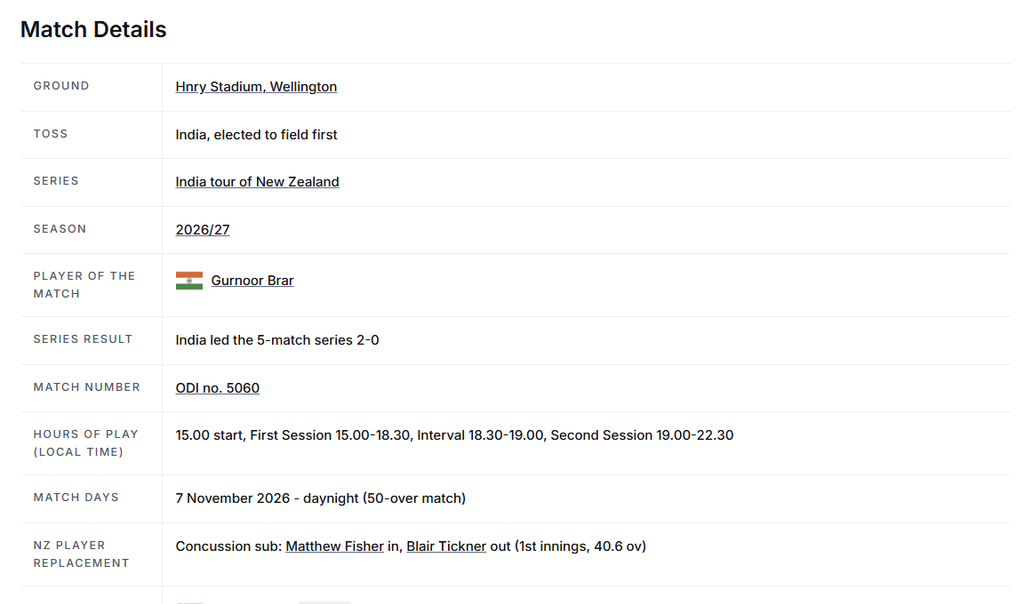
The NZ vs IND 2nd ODI 2026, played at Hnry Stadium in Wellington on Saturday, November 7, turned into a tense contest after India lost several important wickets while pursuing New Zealand’s modest total of 134.
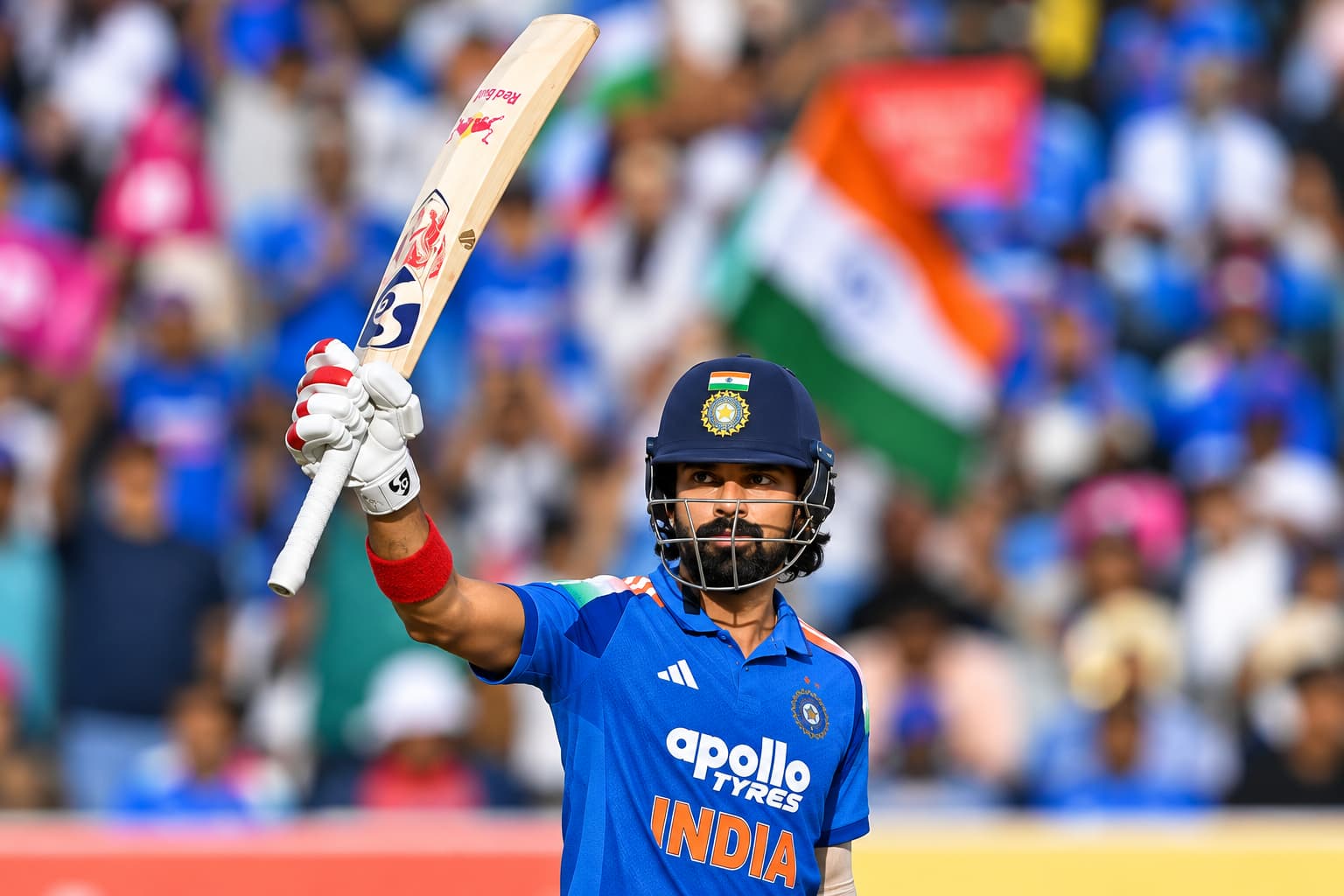
KL Rahul emerged as the key figure in India’s chase, using his experience and patience to negotiate a determined New Zealand bowling attack.
Earlier, India’s fast bowlers delivered another impressive performance. Gurnoor Brar took four wickets, while Auqib Nabi, Anshul Kamboj and Axar Patel contributed two apiece.
Daryl Mitchell’s fighting half-century was the main source of resistance for New Zealand, but the hosts struggled to build partnerships throughout their innings.
For cricket followers visiting Cricbet99, the match provides an interesting example of how early wickets, pitch conditions and disciplined bowling can make even a small ODI target difficult.
NZ vs IND 2nd ODI 2026: Match Overview
India entered the second ODI with a 1-0 advantage in the five-match series after winning the opening encounter in Auckland.
The Wellington match began under overcast conditions, with rain and a damp outfield delaying the start.
Indian captain Shubman Gill won the toss and chose to bowl first, a decision that quickly worked in his team’s favour. The contest was reduced to 47 overs per side because of the delayed start.
India vs New Zealand 2nd ODI Match Details
| Match information | Details |
|---|---|
| Match | New Zealand vs India, 2nd ODI |
| Series | India Tour of New Zealand 2026 |
| Date | November 7, 2026 |
| Venue | Hnry Stadium, Wellington |
| India captain | Shubman Gill |
| New Zealand captain | Mitchell Santner |
| Toss winner | India |
| Toss decision | Bowl first |
| Scheduled overs after delay | 47 per side |
| New Zealand score | 134 all out (41 overs) |
| India’s target | 135 runs |
| Best Indian bowler | Gurnoor Brar – 4/30 |
| New Zealand top scorer | Daryl Mitchell – 55 |
Live report status: At the last verified score update used for this article, India were 112/7 after 25.5 overs, requiring another 23 runs. KL Rahul was unbeaten on 25.
ReadMore<<< Where to Watch India Women’s National Cricket Team Live in 2026 – TV Channels & Streaming Guide
New Zealand Bowled Out for 134 as India’s Pacers Dominate
New Zealand’s innings began under immediate pressure as India’s fast bowlers made full use of the conditions.
Auqib Nabi provided the early breakthroughs, removing both opening batters before New Zealand could establish a meaningful partnership.
Tim Seifert departed without scoring, while Will Young managed only six runs. Anshul Kamboj then dismissed Henry Nicholls for 11, leaving the hosts struggling at 23/3. With three wickets already down, New Zealand needed their experienced middle-order batters to rebuild the innings.
Daryl Mitchell attempted to do exactly that.
However, India’s disciplined bowling made scoring difficult. Boundaries were infrequent, and the New Zealand batters found it challenging to rotate the strike consistently.
The hosts had reached only 53 when their fifth wicket fell.
Gurnoor Brar’s Four-Wicket Haul Changes the Match
Gurnoor Brar was India’s standout performer in the first innings.
His accurate bowling, combined with extra bounce from the surface, created problems for New Zealand’s middle order. Brar removed Tom Latham and Glenn Phillips during the same over, putting New Zealand under further pressure.
He later dismissed Mitchell Santner and Nathan Smith to complete an outstanding four-wicket performance.
Brar finished with 4 wickets for 30 runs from 10 overs, recording his career-best ODI figures.
His performance demonstrated how consistent lengths and well-directed short deliveries can be particularly effective in Wellington.
India’s Bowling Performance
| Indian bowler | Overs | Runs conceded | Wickets |
|---|---|---|---|
| Gurnoor Brar | 10 | 30 | 4 |
| Auqib Nabi | 7 | 31 | 2 |
| Anshul Kamboj | 8 | 25 | 2 |
| Axar Patel | 9 | 28 | 2 |
| Arshdeep Singh | 7 | 16 | 0 |
Although Arshdeep Singh did not claim a wicket, his economical bowling helped prevent New Zealand from building early momentum.
Daryl Mitchell’s Fighting 55 Gives New Zealand Hope
Daryl Mitchell was the only New Zealand batter to score a half-century. Coming in when his team was already under pressure, Mitchell showed patience and determination against India’s bowling attack.
He scored 55 runs from 104 deliveries, including five fours and two sixes.
While his strike rate was relatively low, the conditions made aggressive batting difficult.
Mitchell’s contribution was important because New Zealand were in danger of being dismissed for an even smaller total.
Mitchell Santner Provides Valuable Support
New Zealand captain Mitchell Santner joined Daryl Mitchell during a difficult period. The pair added 59 runs for the sixth wicket, the largest partnership of New Zealand’s innings.
Santner contributed 31 runs from 38 balls, providing some much-needed attacking intent.
Their partnership offered New Zealand a chance to reach a more competitive total.
However, India regained control when Axar Patel dismissed Daryl Mitchell.
Gurnoor Brar then removed Santner, leaving the New Zealand lower order exposed.
The hosts eventually finished on 134 from 41 overs.
KL Rahul Takes Responsibility as India’s Chase Becomes Difficult
India began the chase as strong favourites.
With only 135 runs required in a 47-over innings, the visitors had plenty of time to approach the target carefully.
However, New Zealand’s fast bowlers created immediate problems.
Captain Shubman Gill was dismissed for a golden duck, giving the hosts an early breakthrough.
Virat Kohli, who had played a match-winning innings in the first ODI, also departed cheaply after scoring seven runs.
Rohit Sharma attempted to counterattack and contributed 23 runs, but New Zealand continued to take wickets.
The pressure eventually shifted toward India’s middle order.
KL Rahul’s Experience Becomes Important
KL Rahul is known for his ability to adjust his batting approach according to the match situation.
In a low-scoring chase, the biggest challenge is often deciding when to attack and when to defend.
India did not require a high run rate, but regular wickets meant that another mistake could significantly change the contest.
Rahul responded by concentrating on building his innings rather than chasing quick runs. At the last verified score update, he was unbeaten on 25 from 37 deliveries, having struck two fours and two sixes.
India had reached 112/7 after 25.5 overs, with Rahul attempting to guide the remaining batters toward the target.
Why Rahul’s Innings Matters
There are three important reasons why Rahul became central to India’s chase.
1. Early wickets increased the pressure
When India lost experienced players such as Gill and Kohli cheaply, the middle order had to take responsibility.
2. The pitch rewarded disciplined bowling
New Zealand’s bowlers used bounce and movement to prevent the Indian batters from settling.
3. India needed a batter to remain at the crease
With wickets falling regularly, preserving the remaining batting resources became more important than scoring quickly.
Rahul’s approach reflected the demands of the situation.
New Zealand’s Fast Bowlers Make the Chase Competitive
New Zealand’s pace attack deserves credit for turning a low-scoring match into a contest.
Kyle Jamieson and Jacob Duffy troubled India’s batters with disciplined lengths and short deliveries.
Instead of allowing India’s experienced lineup to chase the target comfortably, they attacked the stumps and used Wellington’s bounce to create opportunities.
Jamieson was particularly effective in removing important middle-order batters.
Duffy also contributed crucial wickets, maintaining New Zealand’s hopes despite the small total.
At one stage, India had lost seven wickets with 23 runs still required.
The scoreboard was a reminder that a target should never be judged without considering the pitch, bowling quality and number of wickets remaining.
What Made Wellington’s Pitch Difficult for Batting?
Hnry Stadium in Wellington is known for conditions that can challenge even experienced international batters.
In this match, the weather and pitch played important roles.
1. Movement With the New Ball
Overcast conditions and a relatively fresh surface helped seam bowlers challenge the opening batters.
Accurate deliveries around off stump created opportunities for edges and mistimed shots.
2. Variable Pace From the Surface
Some deliveries appeared to hold up slightly, making stroke timing difficult.
Batters attempting aggressive drives or pull shots had to judge the pace carefully.
3. Extra Bounce
Short-of-length bowling proved effective for both teams.
Several dismissals demonstrated the risks involved in attacking balls that bounced higher than expected.
4. Pressure From Falling Wickets
As wickets fell, batters became more cautious.
This reduced the number of scoring opportunities and allowed bowlers to maintain pressure.
The result was a match in which both batting lineups struggled to build consistent partnerships.
Key Turning Points in NZ vs IND 2nd ODI 2026
Every ODI has moments that influence the direction of the contest.
The Wellington encounter featured several important turning points.
| Match situation | Why it mattered |
|---|---|
| India elected to bowl first | Allowed the pacers to use helpful early conditions |
| New Zealand slipped to 23/3 | Put the hosts under immediate pressure |
| Brar dismissed Latham and Phillips | Reduced New Zealand to 53/5 |
| Mitchell and Santner added 59 | Helped New Zealand recover temporarily |
| New Zealand finished on 134 | Set India a small but challenging target |
| Gill and Kohli departed early | Increased pressure on India’s middle order |
| New Zealand continued taking wickets | Prevented India from completing an easy chase |
| Rahul remained unbeaten at 112/7 | Kept India in contention with 23 runs still needed |
These developments explain why the contest remained interesting despite New Zealand’s low first-innings total.
What Does This Match Mean for the India vs New Zealand ODI Series?
India arrived in Wellington with momentum after winning the opening ODI.
In Auckland, Virat Kohli scored 74 runs as India completed a five-wicket victory under the Duckworth-Lewis-Stern method.
The second ODI offered India an opportunity to extend the series lead to 2-0.
For New Zealand, the Wellington encounter was an opportunity to recover from their opening defeat.
Although the hosts struggled with the bat again, their bowling effort demonstrated that they remained capable of challenging India.
The remaining fixtures in the five-match series are important for both teams as they evaluate their ODI combinations and prepare for future international assignments.
Upcoming India vs New Zealand ODI Fixtures
| Match | Date | Location |
|---|---|---|
| 2nd ODI | November 7, 2026 | Wellington |
| 3rd ODI | November 10, 2026 | New Zealand |
| 4th ODI | November 13, 2026 | New Zealand |
| 5th ODI | November 15, 2026 | New Zealand |
Schedule information is subject to official confirmation and any subsequent changes.
ReadMore<<<Cricbet99 Live Cricket Guide
Follow India vs New Zealand Cricket News on Cricbet99
The NZ vs IND 2nd ODI provides several useful talking points for cricket supporters, from Gurnoor Brar’s outstanding bowling to KL Rahul’s responsibility during a difficult chase.
Cricbet99 players following international cricket news can explore match reports, team performances, player statistics and explanations of cricket rules.
For audiences across Cricbet99 India, understanding how matches develop can make cricket coverage more meaningful.
What Cricket Followers Can Learn From This Match
Team selection matters: India’s emerging fast bowlers played a significant role in restricting New Zealand.
Pitch conditions influence scoring: A low target does not guarantee a straightforward chase.
Partnerships are valuable: Both teams struggled when wickets fell in clusters.
Experienced players provide stability: Rahul’s role showed the importance of having a recognised batter at the crease during a difficult situation.
Indian Players researching Cricbet99 login, Cricbet99 ID or Cricbet99 App information should use verified website addresses and understand that account-related services are separate from independent cricket news and match reporting.
Frequently Asked Questions About NZ vs IND 2nd ODI 2026
1. Where was the NZ vs IND 2nd ODI 2026 played?
The second ODI between New Zealand and India was played at Hnry Stadium in Wellington on November 7, 2026.
2. How many runs did New Zealand score?
New Zealand were bowled out for 134 runs in 41 overs.
3. What was India’s target in the second ODI?
India needed 135 runs to win.
4. Who took the most wickets for India?
Gurnoor Brar was India’s leading wicket-taker, finishing with four wickets for 30 runs.
5. How many runs did Daryl Mitchell score?
Daryl Mitchell scored 55 runs from 104 balls, providing New Zealand’s strongest batting contribution.
6. Why was India’s chase difficult?
India lost several wickets, including those of Shubman Gill and Virat Kohli, while New Zealand’s fast bowlers made effective use of the conditions.
7. What role did KL Rahul play?
Rahul became an important figure in the middle order, attempting to stabilise the innings after several wickets fell.
8. Why was the match reduced to 47 overs?
Rain and a damp outfield delayed the start, resulting in a reduction to 47 overs per side.
9. Who captained India in the second ODI?
Shubman Gill captained the Indian team.
10. Where can cricket readers find more match information?
Readers can follow official cricket scorecards and Cricbet99 cricket news articles for match reports, player performances and analysis. Live scores should be verified through an authoritative score provider.
A Low-Scoring ODI That Tested India’s Batting Depth
The NZ vs IND 2nd ODI 2026 demonstrated how quickly the balance of a cricket match can change.
India’s bowlers appeared to have given their team a commanding advantage by restricting New Zealand to 134.
Gurnoor Brar delivered an outstanding performance, while Daryl Mitchell provided the main resistance for the hosts. However, New Zealand’s fast bowlers responded with determination, taking regular wickets and placing pressure on India’s batting lineup.
KL Rahul’s role became increasingly important as the visitors worked toward the target.
Whatever the final result, Wellington offered another example of the importance of disciplined bowling, partnerships and situational awareness in ODI cricket.
Explore More Cricket News on Cricbet99
Follow Cricbet99 for informational cricket articles covering India vs New Zealand, ODI match analysis, international cricket statistics, player performances and upcoming tournament news.